
By Caitlin Rothermel
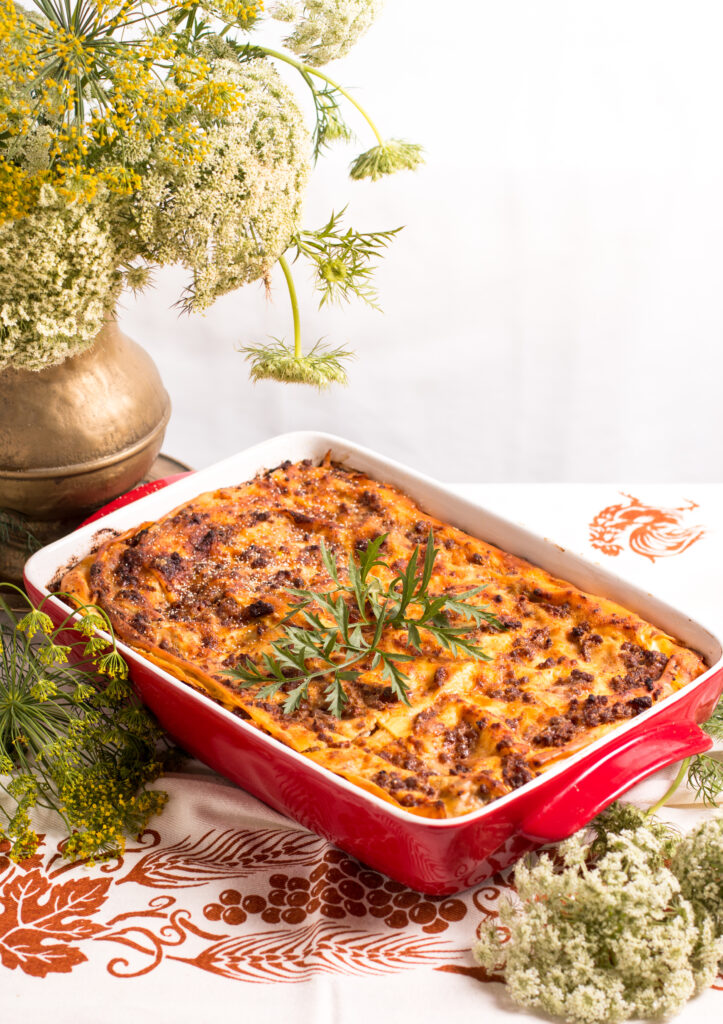
My Uncle Mike lived in Breezy Point, New York. It was a sandy, lovely beach town, and during the summers and holidays, my family would visit his. Sometimes, Uncle Mike would cook lasagna.
He didn’t just cook for us. Mike was a New York City firefighter, and I got to watch him prepare lasagna for his company. Layer-by-layer, he taught me some basic rules for a lasagna to be proud of, and to feed a very hungry team. Cooking for your team was, and is, a firefighter thing; with the long workdays, it’s efficient – and also, camaraderie.
I knew my uncle’s lasagna was special. Great flavor, of course, but also substance, texture, and a deep sense of satisfaction. Mike didn’t skimp on ingredients, and so his final layers weren’t slippery from a lack of filling. His lasagna held together, like cake.
I started making lasagna myself as a young adult when I realized it was just about the best group dish ever. I’ve become kind of a student of lasagna.
And, like most students, I learned first by making mistakes. The most common is watery lasagna. Maybe I didn’t drain the meat, used cheese that was too wet, or neglected to let the final dish stand a while after removing it from the oven. Watery lasagna can happen to the best of us, so I try to think of ways to remove excess water as I go.
Another common miss is not adding enough sauce, which makes the lasagna dry. Or adding too much sauce or using a sauce that is too thin – both of which make the lasagna watery. You want a thicker sauce, and a good amount of it, applied strategically.
For me, an ideal lasagna dish is 9” x 13” and at least 3” deep.
About lasagna noodles. It’s a sad fact of life that, to make a decent family size lasagna, you actually need more than one box of noodles, but way less than two boxes. This is a problem with almost all brands. Ideally, buy lasagna noodles at least 3 boxes at a time.
Also, any type of noodle is probably fine if you plan to eat all your lasagna right away, but special consideration is needed for leftovers. When reheated, normal noodles become soft and mushy. There is a solution – rice pasta lasagna noodles. They remain firm and a bit chewy even if you microwave them. I also think they taste better than wheat noodles in lasagna. They are available online, at Thriftway, and are worth buying in bulk.
One last note: You can add vegetables, but they will always make your lasagna more watery. Spinach or other greens are the best option. Whether fresh or frozen, cook first and drain/squeeze out as much water as possible before layering. For other vegetables, sauté or roast first and allow them to drain or dry on a clean dishtowel as needed.
Ingredients
- Rice lasagna noodles, 2 packages (about 1.25 packages for a 9” x 13” x 3” family dish)
- Mozzarella cheese, at least 2 lbs*
- Whole milk ricotta (part-skim is too watery), 0.5 or 1 quart (to your taste)
- Freshly grated firm cheese (e.g., parmesan, romano), 1-3 cups (to your taste)
- 1-2 lbs ground beef or other meat (optional)
- A thick pasta sauce (about 36 ounces, or ~1.5 large jars)
- Your preferred spices (I use Penzey’s Pizza Seasoning)
- Salt and a little olive oil
* Ideally, use a mozzarella log for at least some; drain excess water by wrapping it in a clean dishtowel for at least a few hours ahead of cooking.
Directions
Cook the meat with salt and your preferred spices; remove from heat while it is still rare. Drain or use a slotted spoon to transfer the meat.
Boil a large pot of salted water and cook lasagna noodles until they are bendable but not soft. Drain the noodles and rinse immediately with cold water.
Prepare the lasagna dish by lightly coating it with olive oil (a little goes a long way); preheat oven to 350°.
Boil a large pot of salted water. Cook noodles al dente (they should still be just a little stiff), usually about 7 minutes.
Layer the first set of noodles on the bottom of the pan, then layer the other ingredients, keeping in mind to alternate wetter and dryer elements. I use this pattern: Layer 1: meat, mozzarella, sauce, one layer of noodles; Layer 2: ricotta, grated firm cheese, sauce, noodles; Layer 3: mozzarella, sauce, noodles; Layer 4: Sauce and grated firm cheese; sprinkle with oregano or other spices if you wish.
Don’t hold back with the ingredients, but don’t overflow your dish, either.
Cook for 45-50 minutes. Cover while cooking if you want, but uncover for at least the last 15-20 minutes to let moisture evaporate. If your lasagna sounds like it is bubbling inside, it is done.
After removing the lasagna from the oven, it’s critical to let it rest for 20-30 minutes before eating.
