
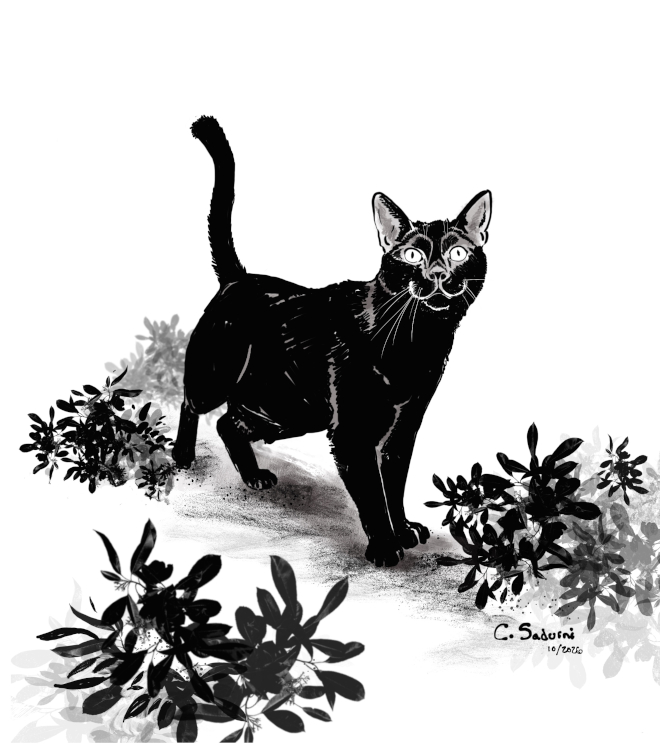
By Cynthia Sadurni
What comes to mind when we encounter the image of a panther, be it a leopard or jaguar? We feel awe, admiration, or maybe wonderment. We may think it majestic, mysterious, strong. So, I wonder, why should our feelings be different when we encounter a black cat? Is it because of centuries of superstition?
Let’s consider this phrase attributed to the great Leonardo Da Vinci: “The smallest feline is a masterpiece.” I couldn’t agree more. Pay attention to how a leopard moves, and you will see the exact fluid grace in a house cat.
So why is it that black cats have a much lower rate of adoption than cats with other coat colors? I have heard from people working at animal shelters that superstition isn’t the only reason in play. There is also a notion that black cats don’t photograph well. This begs the question: is the perfect photo opportunity more important than opening your heart and home to a loving companion? The fact is, with good lighting, a great photo of a black cat is very possible.
Did you know that a high percentage of cats euthanized in shelters are black cats? Some reports cite up to 76% higher than cats of other coat colors.
Most black cat owners will say that their feline companions are loving, affectionate, and loyal. Some people also say that they are gentle and warm-hearted as well. In my experience, black cats, indeed, make devoted soulmates (I am the proud owner of two). The fact that they take longer to adopt may reinforce these traits. When they finally find their forever home, they form deep bonds with their humans. Of our black cats, one waited 3 months and the other almost 6 months to be adopted. Once they came home, they quickly grew into devoted, loving companions.
If you would like to read more about their temperament, you can find many articles online. The website cats.com, amongst others, features some fun ones. (“8 Benefits of Black Cats and Why You Should Adopt One”, “Trusting Black Cat Finds a Purrfect Forever Home,” and many others.)
To celebrate our feline friends, and with All Hallow’s Eve around the corner, I’d like to share some observations and facts about them, as well as some of the folklore surrounding them. Not the spooky, witchy stuff, but the positive, unknown tales of these unsung, gentle cats.
Technically, a black cat’s coat is a product of genetics. They produce high levels of a pigment that turns their coat black. The term for this is melanistic, derived from melanism, the overproduction of the pigment melanin. The fun fact is that most black cats are really tabbies. If you look closely, you may see their spots and stripes!
I am particularly inclined to the folklore from United Kingdom where, in general, black cats are viewed as a positive presence. Here are a few examples:
In England, a black cat crossing your path is considered good luck. They are also believed to be protectors of the home, and bring happiness to brides on their weddings.
Throughout England and Ireland, black cats are a seafarer’s treasure. They are believed to bring good luck, safe voyages, and facilitate a safe return to port. Thus, many ships would seek to have a mini-panther to watch over them. Harming the ship’s cat would inevitably summon misfortune, even terrible storms.
In Scotland, a black cat on your door step is believed to bring prosperity.
Now we travel to east to Japan, where black cats bring both love and good fortune. Also, they were believed to be good omens for opening days in theaters, assuring prosperity and success.
In ancient Egypt, all cats, including black ones, were revered and considered the embodiment of the goddess Bastet. They were thought to bring good luck and protection.
In Türkiye, a black cat crossing your path is a sign of good fortune. Also, cats in general are respected and loved.Happily, things are changing for the better in our country. Recently, two celebration days have been instituted: Black Cat Appreciation Day (August 17th, since 2011) and National Back Cat Day (October 27th).
I hope you find this article fun and that you will have a different outlook on these kind and gentle, yet misunderstood, cats. I’ll end with this lovely English charm:
“Black cat, cross my path, good fortune bring to home and hearth. When I am away from home, bring me luck wherever I roam.” [1]
May it always be so!
in memory of Iñigo, my shining star that burned brightly for 16 years
References
1.https://www.discovermagazine.com/why-do-black-cats-have-a-reputation-for-evil-44218
