
By Gabrielle Wildheart
I am the cliché of the midlife person who spontaneously develops an interest in birdwatching. I’ve been on the Merlin app for a few years now, but in the summer of my 39th year things got a bit more serious, and I graduated to E-bird. (If you know, you know.)
It’s no coincidence that people start birding around the same time their hormonal sleep patterns shift. For the first time in my life, I am actually awake early enough to hear the dawn chorus. I didn’t even know there was a dawn chorus three years ago.
Recently, the birds taught me something very important about my hearing.
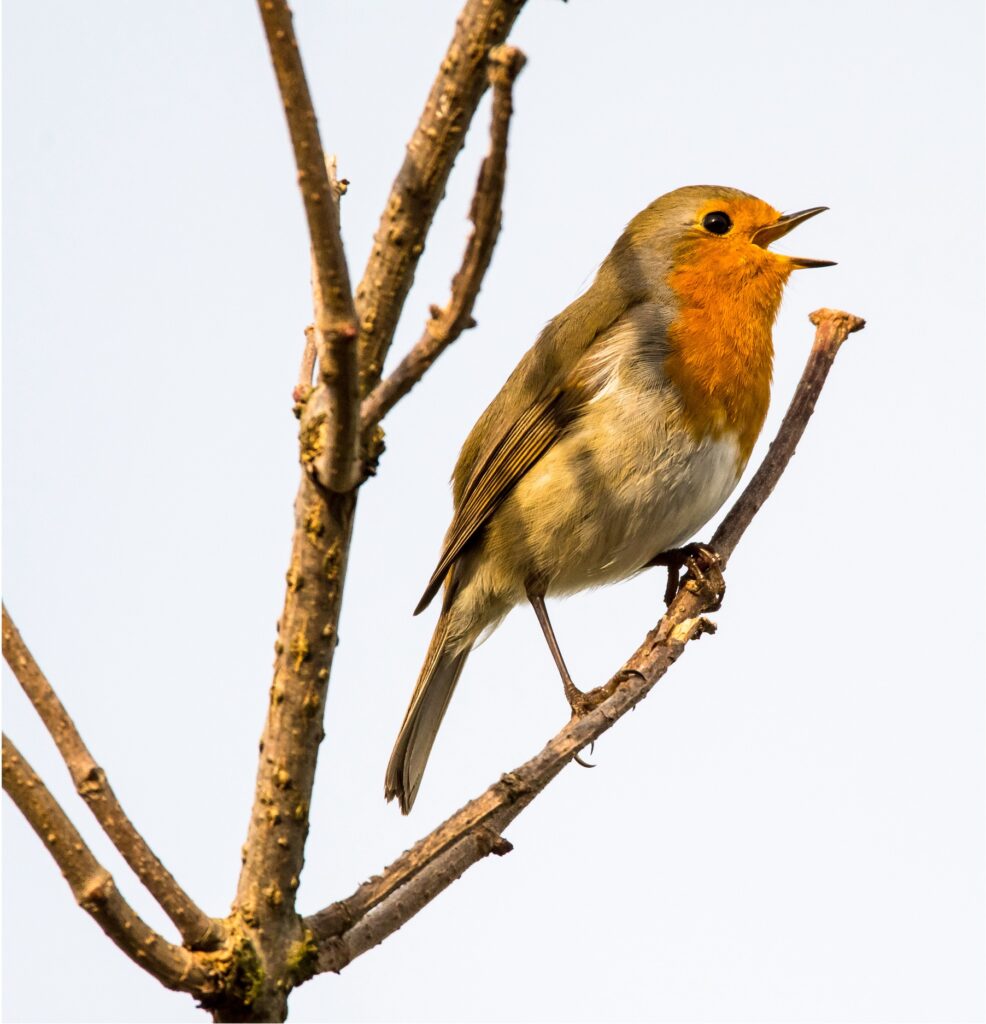
As usual, I was awake early, lying in bed, cuddled with my sleeping husband and dog. I’ve been learning to recognize various birds by their songs, so I was listening to the avian soundscape outside the bedroom, challenging myself to identify as many as possible. Robin … spotted Towhee … Swainson’s thrush …
I roll over, shifting my other ear to the pillow … and suddenly the birds all go silent. I’ve learned that birds will cue changes in the environment. What is it? A hawk? Incoming storm? I lift my head to tune in deeper. With both ears raised off the bed, the birds resume their chatter.
I relax and drop my head back on the pillow. The birds immediately go silent. I realize something is wrong. Quickly, I wake Kevin –
“Babe – wake up! Can you say something? I think I can’t hear out of my left ear.”
With relief, I hear his groggy voice clearly. But a quick test by alternating a hand covering each ear confirms that I am unable to hear the birdsongs equally in both ears.
The next day, I go to a walk-in clinic, thinking they’ll clean out some wax and get my hearing back to normal. After a few tests, the doctor informs me that “Your earwax is fine, but your hearing is not.”
Sudden hearing loss is an emergency, requiring prompt attention and high-dose steroids. I had no idea, and am plunged into two days of ER visits, special tests, and strange medications. Finally, it’s confirmed that I have unexplained, mild hearing loss in my left ear. You’re 39,” the audiologist says. “But your hearing is like that of a 50-year-old.”
My ears have likely been declining for some time. It’s probably genetic. The loss is so subtle that I wouldn’t have picked up on it – had I not started bird-watching.
My interest in birding began around the time I seriously committed to an animist spiritual practice. Animism is the belief that all non-human entities are sacred and deserving of relational respect. For me, Animism extends to rocks, Claude AI, and my truck just as much as it does to animals. The past few years, I’ve been studying with several mentors on this path. In the fall, I’m hoping to be ordained as an inter-spiritual community minister with a focus on animism.
The practice of earth-based animism is a practice of curiosity. Every being in your environment is a potential buddy with wisdom to share. If you remember the popular computer game “Myst” from the 90s, animism feels a bit like that. The clues and stories are non-verbal. The discovery requires interaction, a spirit of play, and the constant search for new connections.
There’s a magical reciprocity in animate relationships that will lead you back to yourself. Because I started listening closely to the birds, I discovered my early hearing loss. An aging ear loses the highest-pitched sounds first. Birdsongs are one of the only natural sounds in that range, making them the first things we notice when we start losing our hearing.
Later that week, I sat in the office of a hearing specialist, surrounded by pamphlets on hearing aids and community groups for deaf people. He explained to me the link between hearing loss and dementia, depression, and heart disease.
“Hearing is the canary in the coal mine,” he says. “It’s an indicator of the holistic health of the whole body.” His bird metaphor is not lost on me. “You will want to monitor the subtle changes in your hearing and track the progression of loss throughout your life. Essentially, you’ll learn to be extra caring towards your ears and sensitive to what you can hear.”
I already know exactly how I will do this.
As I sit now on my porch writing this, I can hear them clearly: Violet-green swallow… song sparrow … pine sisken …
I will keep learning.
I will keep listening.
