

The Flu This Time
By Caitlin Rothermel
The Loop has a reputation for being anti-vaccine. This is the case even though the only injectable drugs we’ve discussed are the COVID-19 mRNA (messenger RNA) shots. We can live with this.
Let’s look now at the first mRNA flu vaccine, developed by Moderna and approved in August by the United States Food and Drug Administration for adults age 50 years and older. As always, see the online version of this story for links to the source documents used.
The Limitations of Traditional Flu Vaccines
Influenza vaccine development is a global effort, led by the World Health Organization. Each year, researchers evaluate multiple types of data, as well as recent patterns of flu spread, to anticipate and select which strains will matter most in the coming season.
Roughly half a dozen types of conventional flu vaccine are available in the U.S, but all are designed around these seasonal strains. However, flu viruses continue to evolve after strains are selected, so – year by year – the match between vaccines and viruses can vary substantially.
Alongside this uncertainty, how well the flu vaccine works varies each year. Since 2009, annual estimates of effectiveness (defined as laboratory-confirmed influenza cases) have ranged from 11% to 60%, but are usually between 30% and 50%. In 2025-2026, effectiveness was 36%.
At the same time, research in the community – a literature review looking at older adults not living in long-term care, and a recent cohort study of Cleveland Clinic employees, have found a mix of modest, uncertain, and even negative benefits from flu vaccination. And, adult flu vaccination rates have steadily begun to decline again since a COVID-era peak, falling to 42% in the 2024-25 season.
In short, traditional flu vaccines are what accountants call a “declining asset.” This was signaled by U.S. health leaders in a 2022 manuscript co-authored by former National Institute of Allergy and Infectious Diseases official David Morens and Director Anthony Fauci, stating:
“After more than 60 years of experience, very little improvement in vaccine prevention of [influenza] infection has been noted … The rates of effectiveness of our best approved influenza vaccines would be inadequate for licensure for most other vaccine-preventable diseases. Even decades-long efforts … have not yet resulted in next-generation, broadly protective vaccines … ”
Enter mRNA. Its potential added benefits in influenza vaccination were described in a 2020 article, also co-authored by Dr. Fauci, as including faster vaccine production, potentially allowing for later strain selection, and greater flexibility to adjust vaccines to respond more quickly to changing flu viruses.
How Does the mRNA Flu Vaccine Work?
Both conventional and mRNA influenza vaccines primarily target hemagglutinin (HA). HA is an antigen – a substance the immune system can recognize and respond to.
HA provides a good target because it sits on the virus’ surface and plays a critical role in allowing the virus to enter respiratory tract cells. During an infection, HA first binds the virus to the surface of a cell. Then, the cell takes the virus inside, where the virus releases genetic material, hijacks normal cell functioning, and begins to make copies of itself.
Both vaccine types are injected into the muscle of the upper arm. In that area, and in nearby lymph nodes, the vaccine material encounters immune cells.
A conventional flu vaccine directly provides the immune system with the targeted HA. The system responds by making antibodies – proteins designed to recognize and bind to specific antigens – directed against that HA type.
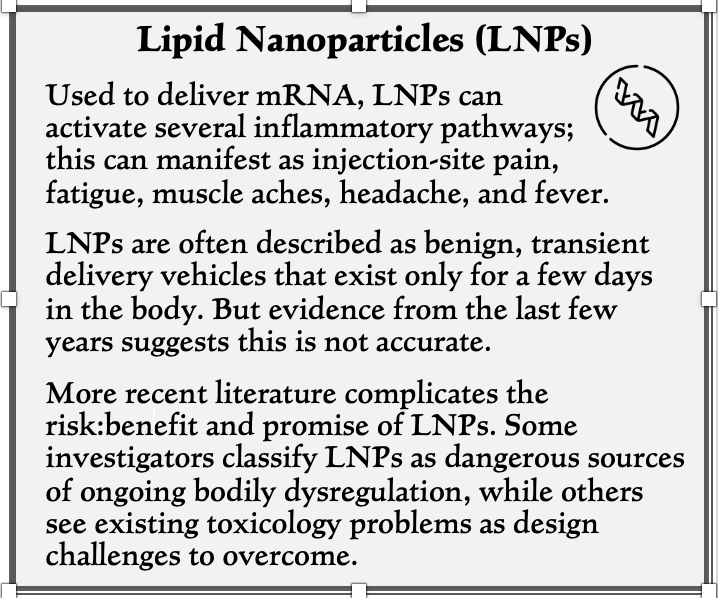
An mRNA flu vaccine delivers mRNA – a genetic message containing instructions to make the HA protein. The mRNA is packaged in tiny fat-based particles – lipid nanoparticles – that allow it to enter into cells (see the callout for more information on nanoparticle delivery). Once inside the cell, cellular structures read the mRNA’s instructions and assemble the corresponding HA protein. The immune system recognizes the newly made HA as an antigen and responds by producing antibodies.
Related to influenza prevention, the next step is essentially the same for both vaccine types: If a flu virus with similar HA later enters the body, the antibodies can recognize and attach to the virus’ HA, blocking it from successfully entering and infecting cells.
Ultimately and importantly, both vaccination approaches use different methods to achieve a similar goal – an antibody-directed response against HA. Whether these different approaches translate into substantially different outcomes is the open question.
The Data By the Numbers
FDA approval was based on two large, randomized trials that compared the mRNA vaccine with conventional flu vaccines. One measured whether the vaccines actually prevented influenza; the second measured the antibody responses produced.
The prevention study included more than 40,000 adults aged 50 years and older, assigned to receive either the mRNA vaccine or a standard-dose flu vaccine. No placebo was used, so none of the comparisons discussed can be compared to being injected with saline water. Researchers tracked participants for about six months looking for cases of lab-diagnosed flu.
Compared to the conventional vaccine, the mRNA vaccine reduced laboratory-confirmed influenza by 26.6%, which was statistically significant. In absolute terms, this was a difference of about 0.7 percentage points – 2.0% vs. 2.8% developed confirmed flu, with stronger results for influenza A than influenza B. Translated, that reduction means that, to prevent one additional flu case, about 137 people needed to receive the mRNA instead of the conventional vaccine.
In terms of safety, short-term reactions were substantially more common with the mRNA vaccine. Most were mild or moderate and lasted a day or two. These are the kind of disruptions that can effectively end your productive day and maybe also make the next day hard – this happened to 6.4% of mRNA recipients compared to 1.0% receiving the standard-dose vaccine.
As pointed out by the Rational Health Substack, this ” … works out to roughly one additional day-stopping reaction for every 22 people vaccinated, against one case of illness prevented for every 137.” A numerical comparison like this offers some perspective on short-term risk.
People were also more likely to feel the mRNA vaccine after injection. The most common reactions were the same with both vaccines, but again occurred more frequently with mRNA than conventional: injection-site pain (66% vs. 30%), fatigue (45% vs. 20%), headache (38% vs. 18%), and muscle pain (35% vs. 12%). Serious adverse events – meaning hospitalization, life-threatening illness, disability, or death – happened at similar rates (2.2% vs. 1.9%).
An important note for older people – this study compared the mRNA vaccine with a standard-dose flu vaccine, but this is not the vaccine generally recommended for adults age 65 and older.
Because of this, another study was conducted in this age group. It compared the mRNA vaccine with a higher-dose vaccine, but looked only at antibody response, not efficacy. The mRNA vaccine produced stronger antibody responses against all flu strains tested – about 10% to 30% higher at 29 days, again with an advantage for influenza A strains.
Safety findings mirrored the prevention study, both in terms of overall patterns and how often events occurred. Short-term reactions, mostly mild or moderate, were substantially more common with the mRNA than the high-dose vaccine. Reactions severe enough to prevent normal daily activities were also more common with mRNA.
Two additional points – In those 75 years and older, the mRNA vaccine’s antibody advantage wasn’t apparent; responses to the two vaccines were generally similar. The study also excluded people with immunodeficiency or immunosuppressive conditions.
My conclusion? The available research provides no information on whether the mRNA vaccine can solve the problems it was identified to address – variable effectiveness and imperfect strain matching. As the evidence stands, the current evidence also fails to show how these vaccines could address the greater problem of limited overall effectiveness identified as a challenge by health leaders. One thing we do know for sure is that this product is likely to make you physically uncomfortable.
Some Practical Notes
In terms of fall availability, glitches exist. Normally, the CDC’s Advisory Committee on Immunization Practices (ACIP) would weigh in before vaccinations began. This year, its March and June meetings were cancelled because of ongoing litigation, and its next meeting is not until October.
FDA approval means the mRNA vaccine can be sold, but its coverage by private insurers remains unclear.
In Washington, the Department of Health says the vaccine is “expected to be available commercially for the upcoming respiratory season but currently isn’t included in the WA Adult Vaccine Program,” which supplies vaccines for uninsured adults.
