
By Andy Valencia
Westphalia has an important place in the history of Western Civilization. Currently a part of Germany, it was the site of the accords which ended the Thirty Years’ War in 1648. Setting aside politics, it is also the home of Westphalian pumpernickel. Germany is well-known for its dark breads, but this one is getting new attention, even here on Vashon Island.
In a world of refrigeration and same-day Amazon deliveries, it’s easy to forget how survival was not a given for the poorer parts of society in the 15th century. The food one set aside during the growing season could be what permitted survival in the winter that followed. That food had to nourish, but if it spoiled, a family could starve. The genius of Westphalian pumpernickel was that, with cheaply available Middle Age technology, one could prepare loaves with excellent fiber and nutritional value, and a shelf life of at least six months.
Thus, many people are mastering anew the techniques to make this bread, and setting aside loaves, which keep for half a year. It’s made with a few cheap ingredients, and is stored without refrigeration, canning, or vacuum-packing. It’ll keep you fed no matter what happens in the bigger world.
Why does it keep so well? Why is it so nourishing? It comes from how it’s cooked, so let’s walk through that first.
You’ll need a bread pan; 9- by 5- by 2.5-inch pans have worked well for many bakers. It either needs a tight-fitting metal lid, or else you’ll need aluminum foil. Stainless steel cookware has become very popular due to concerns with plastic toxins and microplastics, so you’ll need butter or lard plus cornmeal in order to coat the sides and bottom. An organic non-stick coating!
Start with rye-based sourdough starter. If you haven’t made a starter for yourself, turn back to The Loop’s March 2026 issue for a tutorial, “Fresh – Yet Ancient – Bread;” it’s on vashonloop.com if you don’t have the paper copy. Or buy some starter. But if you make it yourself, you’ll never worry again about empty shelves in the baking section of the market.
Next, get rye berries, and grind them into a consistency a little bit finer than cornmeal. If you don’t have a food mill, blast them in your blender, then sift it to that cornmeal consistency; some prefer it a little finer, but you want a meal, not a powdery flour.
How much to grind? Simplest is to grind enough to fill your bread pan to right near the top. Now dump it in a mixing bowl, mix in a pinch of salt. Add boiling water a bit at a time, mixing it in until you have a thick batter that is a little hard to stir. Now, let it cool down as the hot water softens the rye. When it’s cool to the touch, mix in a half-cup or so of your starter, and stir it all together.
Westphalian pumpernickel is not “fast food,” and here we wait again, to give the sourdough starter time to process your ground rye. This is not like the white flour rising with commercial yeast; give it at least 12 and up to 24 hours. You’d like to see some bubbles from the yeast action, and the dough should have that characteristic sourdough smell. The dough will expand some, but not dramatically like its white flour counterpart.
Smear a thin layer of butter or lard on the sides and bottom of your bread pan, then sprinkle cornmeal a pinch at a time until you have a nice dusted coating on all the surfaces. Pour in the mix, right up to the top. Pumpernickel will stick to aluminum foil, so now do the same butter or lard treatment to the part of the foil that will cover the top. Or if you have a lid, do it to the inside face of the lid.
If you found a stainless steel bread pan with a snug metal lid, fantastic. They can be hard to find (in which case you’ll need to seal the pan with aluminum foil). This seal is VERY important – if the dough’s moisture vents out during cooking, the loaf will scorch. Many people use more than one layer of aluminum foil, just to get a truly tight seal all the way around. The foil with the treated face goes down against the dough, tucked all around the edges. Then consider a second, outer wrapping of foil to really seal in the moisture.
Put your loaf into the oven, and set it to 300°. The loaf will heat up along with the oven, getting the dough to a more uniform starting temperature. This isn’t the baking temperature, so be sure to stay nearby and wait for the oven to reach 300°.
Now, lower the temperature to 220°, and note the time. It’s going to bake in there for at least 18 hours, with 20 a typical duration and some bakers going the full 24 hours. Most ovens automatically shut off, often after 12 hours. Disable that, or remember to be nearby so you can turn it back on immediately.
While your bread’s baking away, let’s turn to all the amazing science and chemistry those 15th century bakers discovered through years of experimentation and observation.
Rye itself is a wonderful grain. Much hardier than wheat or barley, it germinates and grows well in poor soil and bad growing weather. It was often grown alongside wheat, so the farmer would still have something to eat and sell, even when the wheat failed that season.
But rye is not just a hardy wheat; while it has gluten, much of its baked consistency comes from pentosans. This is a plant fiber which is remarkably efficient in binding to water. A rye loaf can feel moist, but the water is bound in a way that keeps it from being available to mold. This is the first of the reasons that this rye-based bread stores so well.
The second line of defense is that sourdough culture. Its reaction with the milled rye and water creates both lactic and acetic acids. The environment created by these acids is hostile to the molds and bacteria that would otherwise grow and spoil the bread.
The final preservation mechanism comes from that long, low-temperature bake. Known as the “Maillard reaction,” it breaks down the rye’s starches into melanoidins, which give black German bread its dark color and sweet, molasses or chocolate flavor. The melanoidins add a final defense against spoilage, since they also dampen bacteria and mold development.
The sourdough plus slow bake have one extra benefit. Phytic acid is present in most breads, and it binds to nutrients like iron, zinc, magnesium, and B vitamins. In fast-baked bread, this acid remains, making these nutrients relatively unavailable. In Westphalian pumpernickel, the acid is broken down, resulting in a loaf of bread with much higher food value.
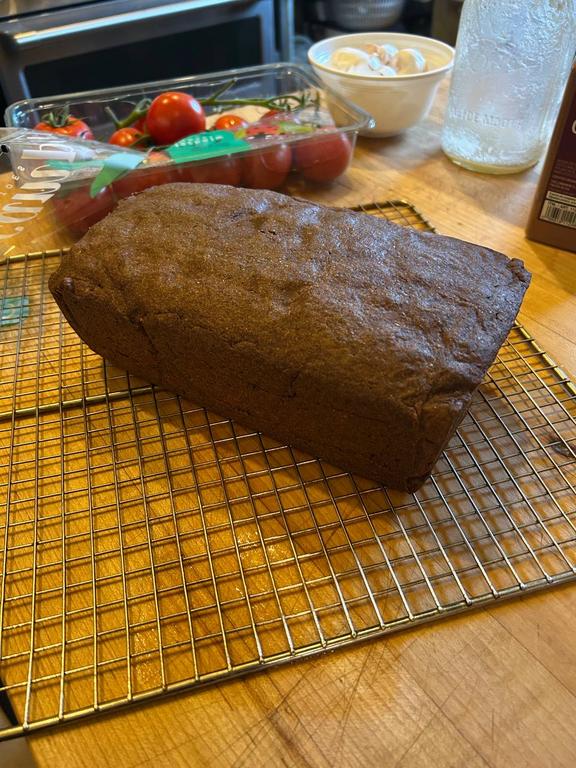
When it comes out of the oven, pop it out of its tray and let the loaf cool for 24 or even 48 hours. Hopefully you’re looking at a dense, dark loaf with that earthy black bread smell. Admire its rich color and dense structure, but don’t cut it yet! Let it cool entirely, and then wrap it tightly in foil, plastic wrap, or even beeswax cloth. Let it sit for two days as it reaches the ideal texture. Now you can unwrap your bread and finally taste it.
How to eat it? Its density lets you cut very thin slices, so start by nibbling a thin slice just as it is. Germans with their dark breads will love it immediately – if your palate is trained by fluffy white breads, it’ll be a bit of a shock. Add some butter to your next nibble, and then on another part, try a nut butter. Many people swear by garlic butter.
Now take another slice and toast it. With a little bit of a crunch, you’ll probably find it much more bread-like. Again, try butter and nut butter.
Finally, in my own life I have regular vegan fasts, with my breakfast often being oatmeal. Here’s a place where the pumpernickel bread makes a huge difference. I cut small cubes of it, and mix them into the oatmeal. They add a chewy extra texture, but that Westphalian pumpernickel magic shows up hours later. When I’d usually feel a glucose sugar crash, the nutrients from the pumpernickel sustain me all the way to lunchtime instead.
More flavor and less sugar with lots of nutrients. Great storage life and inexpensive ingredients. Channel your inner Middle Age peasant and give this centuries-old recipe a try.
