
Seán Malone & John Sweetman
Seán and I grew up on different islands, but shared so much of the same experiences. We always knew the “warning signs” of summer, which arrived in July, not June, which was typically a gloomy month.
The signs of summer were not merely longer daylight hours, warm days, and the end of school, but the change in the color of eggs from winter’s pale yellow to a brilliant orange. Milk changed, as well. In the fall and winter, milk was pale, but still rich in cream. Years ago, most of us had dairy products from very local small herds that were Guernsey or Jersey breeds. They gave 15 to 20 percent butterfat.
No one had the now-common Holstein breed. My dad said, ‘I won’t milk a cow when you can see the bottom of the bucket.’ Holsteins produce massive amounts of milk, but low butterfat content.
As the red clover bloomed and the cows ranged in rich pastures, milk took on a yellow, and then almost an orange, color. Today, “Annato” is added to get that color, but years ago it was a natural sign … that “ice cream was coming!”
As one knows, ice cream is made with “cream.” Lots of it, and thankfully there were a number of small kids around to do the hard work involved in those days. This is how later we learned about the concept of “unpaid junior interns.” Or incentivized child labor. This was because making ice cream was tedious, and the supervisory adults were off smoking cigars and tasting cocktails while we kids did the work.
Loads of rich cream, vanilla, and other secret additions, and all we kids had to do was crank the handle of the ice cream maker. One secret addition my mother added occasionally was full cream fermented buttermilk. It turned out we liked that combination.
Of course, we played games while doing the tedious work of cranking the ice cream maker for what seemed … hours.
“How long can you put your hand in the salt and ice mixture?” Salt was added to chipped ice to drop the temperature of the outside mix, and in those days, one got a big block of ice that had to be chipped by hand.
“I’ll crank now!” That was the response after your hand turned blue … a deft way to not admit you couldn’t take it anymore. And all this led to “ice cream.” This was the true start of a Northwest summer … as Seán relates …
It was the 4th of July and the family gathered at the Homestead at Portage to take in the fireworks. Brother Mike was sitting on the lawn, cranking the ice cream maker. Mike complained, “It’s getting too hard to crank.” That’s how we knew that the ice cream was ready.
Seán was four years older than Mike’s six years, and stepped in to help crank. Turning the crank was getting harder, but not too stiff yet. When he couldn’t turn the crank anymore, Mom came over and removed the crank from the two-foot high wooden ice cream maker. She carefully removed the stainless steel container from the bucket of salt and ice. She opened the container and removed the wooden paddles, dripping with ice cream.
We always fought over who got to lick the paddles, so Mom made us line up, youngest first, and each of us got to lick the paddles in turn.
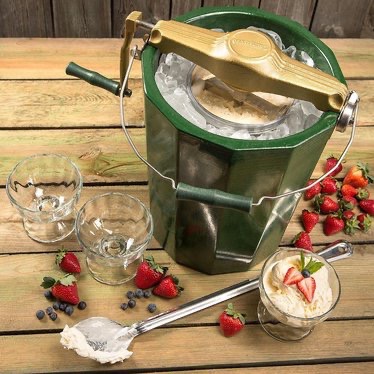
The ice cream maker was a wooden barrel, two feet high, with the stainless steel container mounted in the middle and the crank for turning it on the side. When the milk and cream mixture was added to the container, it was closed and placed in the wooden barrel. Ice chips were then added to the barrel in layers with rock salt added to the top of each layer to cause the ice to melt faster, making things even colder. Water was added to the barrel to aid the melting and a notch in the top of the barrel allowed the excess water to escape.
Grandma Ada and Papa Jim had 22 grandchildren in total, with 11 living on Vashon, mostly at Portage. Grandma Ada wore a gold bracelet with gold medals hanging from it. A medal for each of her grandchildren.
Each run of the ice cream maker only produced a couple quarts of ice cream, so there had to be three or four runs to provide enough ice cream for all the Carahers and Malones.
