
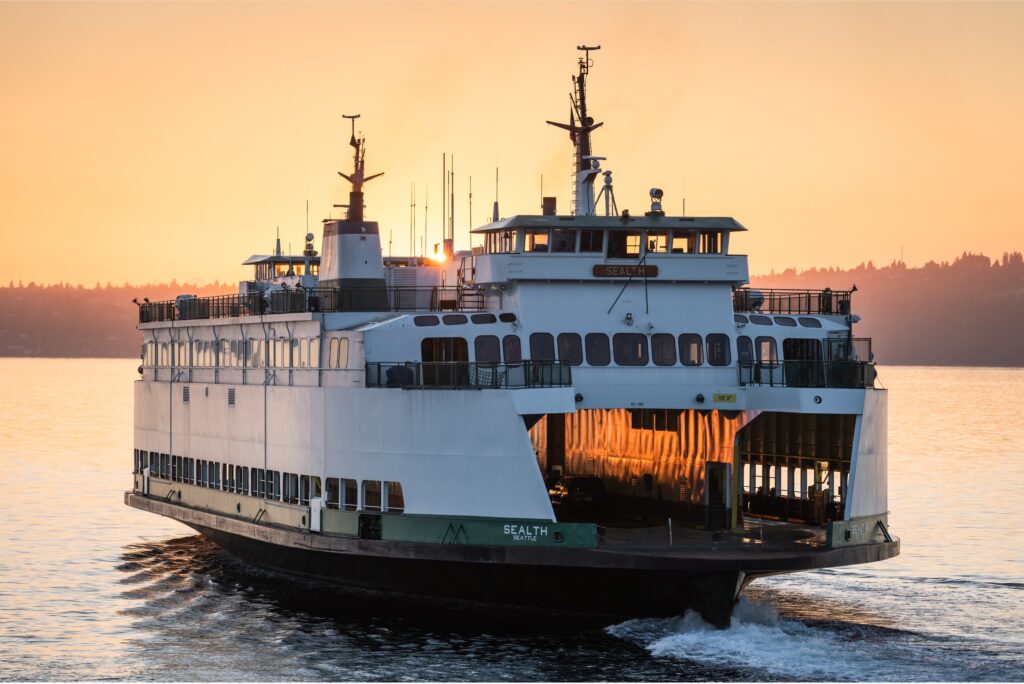
Olympia lawmakers are poised to begin discussions of a proposed “Equitable Ferry Initiative,” with plans to pursue legislation in 2027 to increase revenue while balancing personal responsibility among Washington State Ferry system users.
Washington State is unique in that its ferries are part of the state Department of Transportation highway system. Known as the “marine highway,” ferries receive about 7% to 10% of the transportation budget, while physical highways get about 35% to 40%.
Depending on how you define it, between 1% and 5% of state residents are reliant on WSF services, with rider fares covering about half the system’s operating costs. But structurally and financially, WSF faces overlapping dilemmas: Ridership overall, but especially passenger ridership, declined sharply after COVID-19 and has not fully recovered. This is the case even as vehicle ridership has risen in the last couple of years due to more people moving to communities with ferry access. At the same time, an aging fleet and delays in new ferry construction have created vessel shortages across the system.
This has led to growing consideration – and some burgeoning disagreements – about whether targeted pricing changes could move the system closer to fairness and stability.
Some view ferry riders as disproportionately affluent, particularly riders in communities like Vashon Island. According to local activist Hoo Alvarazieni, “Ferries deliver mobility to a comparatively small slice of the population. It is time to acknowledge that there is a severe inequity in terms of access to or to even desire for this experience.”
In a detailed email exchange, Alvarazieni suggested that ferry-dependent living is an entitlement worthy of redistribution through collective economic obligation: “There is something inherently unproductive about “Island Living.” It does not seem like it should be a human right to live on an island.”
Others argue that where a person chooses to live is a deeply personal decision, tied to family, work, culture, community, and quality of life, and not something to be treated as a luxury deserving special financial penalties. According to one Vashon resident: “People who live here already pay more for a lot of things than people on the mainland. It is hard to not feel frustrated when policy changes seem to assume that everyone who rides the ferry is wealthy.”
Speaking on background, one Olympia official praised the initiative, saying, “A more targeted fare structure recognizes that not everyone has the same ability to absorb higher costs.” When questioned as to whether this approach could be perceived as replacing one imbalance with another, the official emphasized the need for an adjusted perspective: “Public services that primarily help low-income people get called ‘entitlements,’ while public services that inconvenience wealthy homeowners get called ‘urgent infrastructure priorities.’”
One proposal currently being floated is the ferry “equity card.” Similar in appearance to the purple “V” cards placed in dashboards by some Vashon residents to indicate their planned destination, the equity card would retain and make mandatory the directional “V” while bringing in new color-coded and electronically embedded options. This would enable a individualized cost structure based on destination and the driver’s unique disenfranchisement status.
According to local policy experts, a person’s status could be based on race, sexual orientation, income, or female gender. But there are complications with this approach because multiple intersecting forms of disadvantage may exist within one person’s experience. Recognizing this issue – alongside the fundamental unfairness of possessing too many equity cards – proponents suggest the card should reflect a person’s most significant form of marginalization.
To these barriers, The Loop would also add – unless a person’s status is based soley on self-report, such measures would have to deal directly with thorny issues like photo ID and possibly income verification.
Most concerning to local residents is that some alternate fare structures propose higher fares on people who travel to islands or other locations lacking direct access beyond a ferry. For Hoo Alvarazieni, this feature is non-negotiable:
“The electric ferry was our last effort to try and save this system from itself. We need to look at who benefits most here. Not workers in Seattle paying more for groceries every month. Not tenants in Tacoma whose rent rises faster than their wages. No, the beneficiaries are those whose primary hardship is the emotional burden of living in relative, peaceful isolation while still insisting they are ‘in Seattle.’”
